A kitchen extension costs about £40,000 to £70,000 in 2026, around £50,000 on average, and £55,000 to £90,000 in London and the South East. The build alone is about £42,000 to £56,000 for 20m², including VAT. The kitchen adds £8,000 to £14,000 at mid-range, or £20,000 and up for high end.
Written with Risdon Renovations, a family building firm in Faversham that's been building extensions and kitchens across Kent for over 40 years.
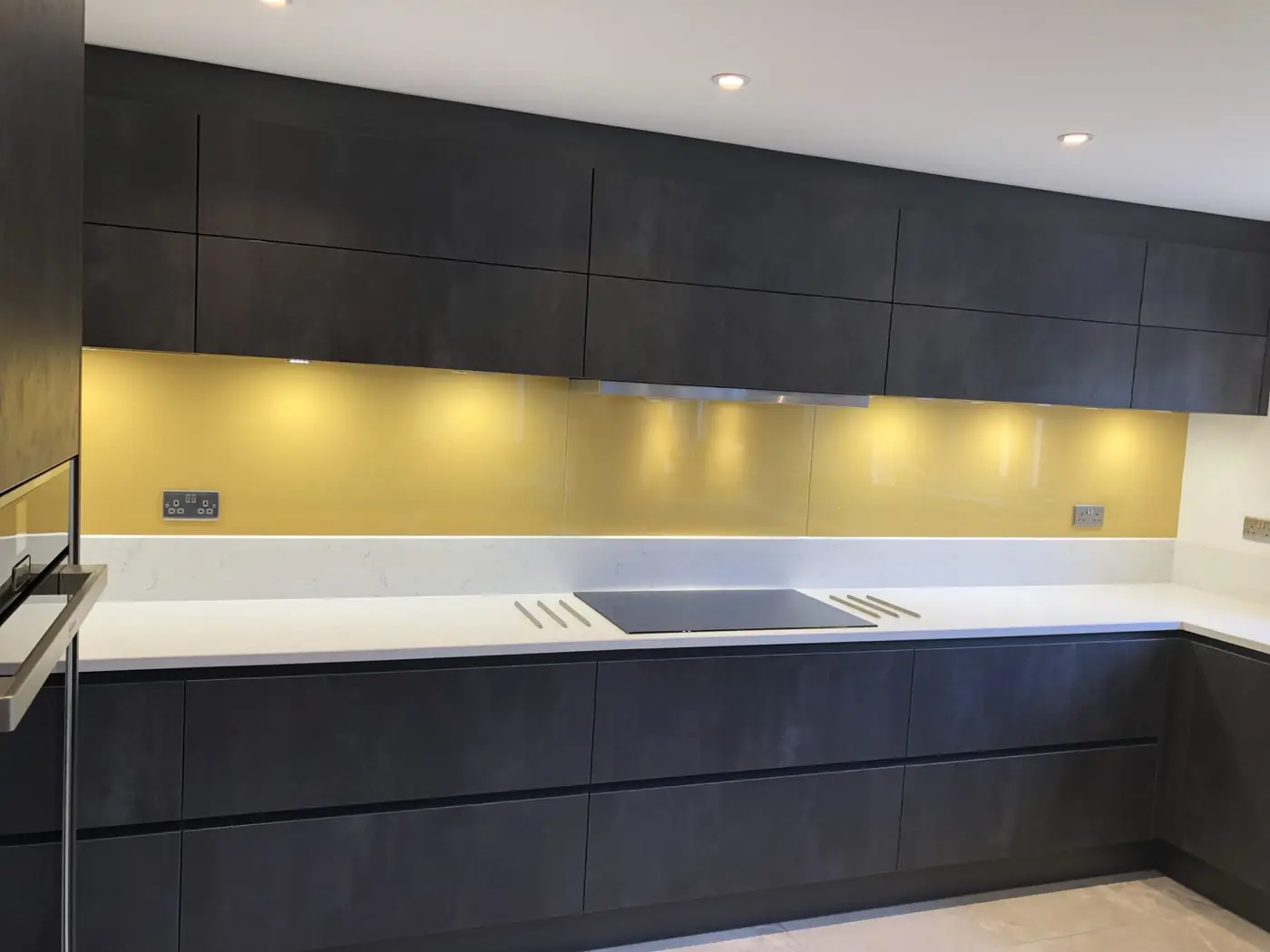
The first quote for a kitchen extension often has a surprise in it: there's no kitchen. You've been priced for the room, with its steels, floor and drains, but not the units, worktops and appliances that go in it. What you're holding is a quote for a very expensive empty room.
So this guide splits the price into the three numbers builders rarely put side by side: the build, the kitchen and the VAT. General extension costs, fees and a full 20m² budget are in our hub guide, How much does an extension cost? This one is about everything that makes it a kitchen.
How much does a kitchen extension cost?
According to MyJobQuote (October 2026), a typical kitchen extension costs £40,000 to £70,000 fully finished, and most cost around £50,000. In London and the South East it's £55,000 to £90,000. Size, finish and how much of the old house changes decide where yours lands.
| Size | Build only, with VAT | With a mid-range kitchen |
|---|---|---|
| 15m² | £31,500 to £42,000 | £39,500 to £56,000 |
| 20m² | £42,000 to £56,000 | £50,000 to £70,000 |
| 25m² | £52,500 to £70,000 | £60,500 to £84,000 |
| 30m² | £63,000 to £84,000 | £71,000 to £98,000 |
Build only: BestBuilders (September 2026), standard spec, fully finished, including VAT and fees, excluding the kitchen. The last column is our sum: the same figures plus MyJobQuote's £8,000 to £14,000 for a mid-range kitchen.
Small extensions cost more per m², because the steel, the digger and the drains don't shrink with the room. A 3m by 3m "kitchen widening" still runs £16,500 to £38,000 (BestBuilders).
The build, the kitchen and the VAT
Builders price kitchen extensions at three levels: a shell, a part-finished room, or a finished room ready for the kitchen. Most quotes don't include the kitchen, and many are given before 20% VAT. That's why two quotes for the same extension can look £30,000 apart without either builder being wrong.
| Level | Per m² | Usually means |
|---|---|---|
| Shell | £1,000 to £1,400 | The structure, weathertight, with little done inside |
| Part finished | £1,400 to £1,800 | Some of the inside work done too |
| Finished room | £1,700 to £2,500+ | A finished room, usually still without the kitchen |
Source: MyJobQuote, October 2026.
Homeowners notice. "My 60k+VAT doesn't include the new kitchen," wrote one on Reddit this year. Another asked the question everyone's thinking: "Why do builders, and also the 2500 per square meter guideline, always exclude VAT as it's not like I can avoid paying it."
Architect Rick Fabrizio's tip is to take your total budget and divide it by 1.2 to see what's left before VAT (Homebuilding). It's the most depressing bit of maths in the whole project, and the most useful. Do it early, while the answer can still change the plans.
How much is a kitchen extension per m²?
A kitchen extension costs roughly £1,300 to £2,500 per m², depending on finish (MyJobQuote). Quantity surveyor Tim Phillips puts most projects at £1,750 to £2,350 per m² of new space, before VAT and fees (Homebuilding). Our hub guide uses £2,200 to £3,300 per m² for a whole single storey extension.
The figures disagree because they price different things, which is the theme of this whole page. Always ask what a per m² figure includes before you multiply it by anything. A number that leaves out the kitchen, the glass and the VAT is a lovely number, and you'll never pay it.
What does the kitchen itself cost?
A new kitchen, supplied and fitted, costs about £5,000 to £7,000 at budget level, £8,000 to £14,000 mid-range and £20,000 and up for high end (MyJobQuote). Houzz found the median major renovation of a large kitchen cost £20,000 (Houzz, 2025). Here's what a new kitchen costs, line by line.
| Item | Typical figure | Source |
|---|---|---|
| Units, 11 to 15 | £2,200 to £4,300 | MyJobQuote |
| Worktop, 5m run, laminate | £200 to £800 | MyJobQuote |
| Worktop, 5m run, quartz | £1,250 to £4,200 | MyJobQuote |
| Island, mid-range, fitted | £2,000 to £5,000 | trade2base |
| Oven, hob, fridge freezer and dishwasher, basic | under £2,500 | Homebuilding |
| Engineered wood floor, 14m² | £500 to £1,300 | MyJobQuote |
| Downlights, one room | £300 to £500 | MyJobQuote |
| Underfloor heating, electric | £40 to £90 per m² | MyJobQuote |
| Underfloor heating, wet | £100 to £190 per m² | MyJobQuote |
The island is the expensive bit. In a Magnet survey of 2,000 people, the island was the single biggest kitchen spend, averaging £5,276 (Magnet). It often needs its own plumbing and electrics too, which adds to the fitting cost.
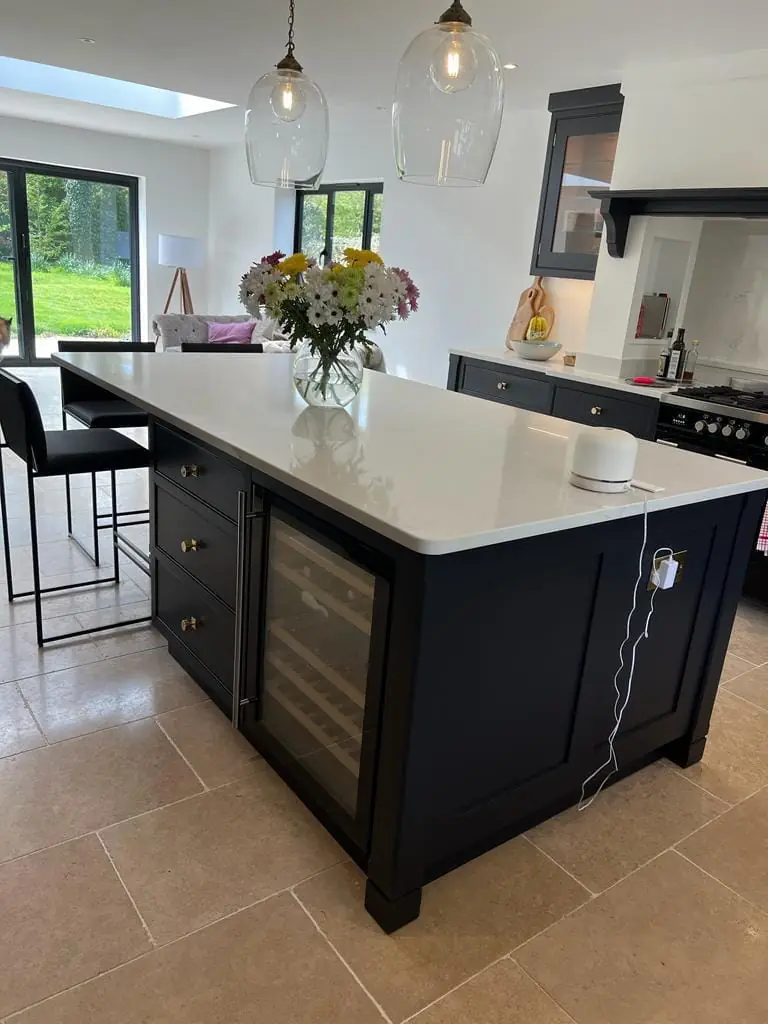
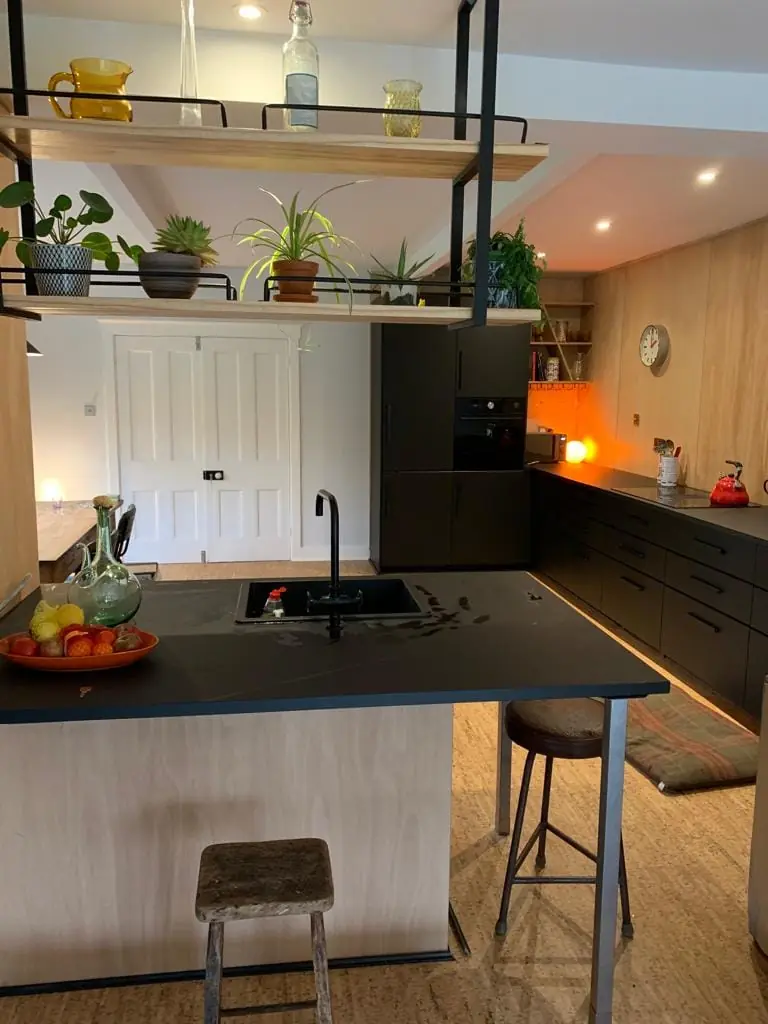
One more number from that survey: 20% of people regretted not adding underfloor heating. That's one in five people standing on a cold floor every morning, thinking about it. It's much cheaper to put in while the floor is up than to add later.
Steels, chimneys, drains and gas
Knocking through to make a kitchen diner usually means a steel beam: about £1,250 to £1,750 for a 2m opening and £2,400 to £3,000 for 4m (MyJobQuote). Moving the sink, the soil stack, the boiler or the gas supply adds more, and these are the costs that most often push a budget up.
| Job | Typical figure | Source |
|---|---|---|
| Knock-through and steel, 2m opening | £1,250 to £1,750 | MyJobQuote |
| Knock-through and steel, 4m opening | £2,400 to £3,000 | MyJobQuote |
| Ground floor chimney breast removed | £1,500 to £1,750 | MyJobQuote |
| Moving the sink, same wall | £400 to £500 | MyJobQuote |
| Moving the sink into an island | £800 to £1,100 | MyJobQuote |
| Moving the soil stack | £800 to £2,000 or more | BestBuilders |
| Moving a combi boiler | £500 to £1,200 | MyJobQuote |
| New consumer unit | £350 to £750 | MyJobQuote |
Surveyor Ian Rock warns that heating, lighting and power are "notoriously prone to cost overruns", because "it's fairly common to underestimate how many lights, sockets and taps will ultimately be needed" (Homebuilding). Count your plugs now. Then add four for the things you haven't bought yet.
Bifolds, sliders and roof lanterns
A set of three aluminium bifold doors costs about £3,150 to £4,650 fitted (MyJobQuote). A roof lantern averages around £2,250 (MyJobQuote), and most people spend £2,500 to £4,500 once the kerb it sits on is built (BestBuilders). In the South East, lanterns cost about 11% more than the UK average.
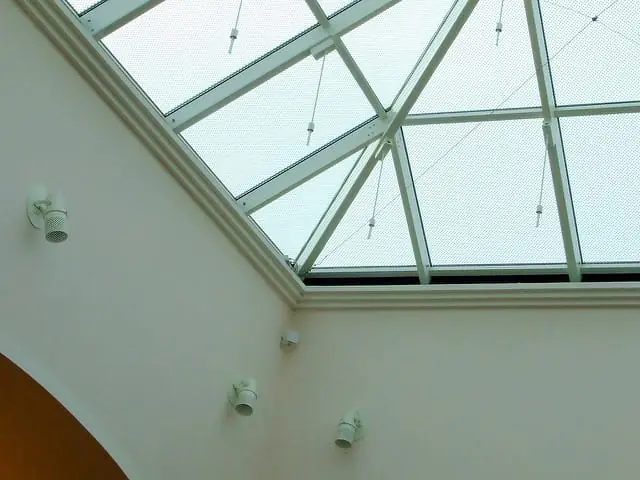
The lantern itself is only part of it. "A typical scenario is budgeting £2,500 for a nice aluminium unit, then discovering you need steels, scaffolding, upgraded glazing and Building Control sign off, pushing the true cost closer to £6,000", says Book a Builder. The lantern turns out to be the cheap part of the lantern. A flat rooflight the same size costs 20 to 40% less, with flatter light (BestBuilders).
Risdon builds the flat roof, the structure and the opening for roof lanterns, and the lantern itself comes through its sister company, PGS Glass. It's one job, which matters, because a lantern fitted onto a roof that wasn't built for it is more likely to leak.
Adding a utility or boot room
A small 2m by 3m extension for a utility room, WC or boot room costs about £13,500 to £26,000 including VAT (BestBuilders). At the top end that's about £4,300 per m², our sum, for a room whose main job is holding wellies and a tumble dryer. It's poor value because the foundations, roof and drains cost much the same for a small room. It can be better value to make the main extension a little longer and fit the utility inside it.
Rules that change the price
Kitchen extensions have their own building regulations: glass is capped at 25% of the floor area plus any openings the extension covers, and kitchens need extract ventilation. New circuits and gas work have to be done by registered trades. Each rule can change what you build, and so what it costs.
| Room | Extract rate |
|---|---|
| Kitchen, cooker hood venting outside | 30 litres a second |
| Kitchen, no hood or a recirculating one | 60 litres a second |
| Utility room | 30 litres a second |
Source: Approved Document F, table 1.1.
- Glass. Windows, rooflights and doors can't exceed 25% of the extension's floor area, plus the area of any windows and doors it covers up (Approved Document L, paragraph 10.7). The 2026 edition, in force from 24 March 2027, keeps the same rule. More glass is possible, but it needs a longer energy calculation.
- Electrics. A new circuit or consumer unit is notifiable work, so it needs a registered electrician or building control (Approved Document P).
- Gas. Moving a hob, cooker supply or boiler is work for a Gas Safe registered engineer (HSE).
- Sewers. Building within 3m of a public sewer needs Southern Water's permission, and rear extensions often sit near one.
Planning permission is a separate question, covered in our guide to planning permission for extensions. Building regulations apply either way, so getting out of one set of forms never gets you out of the other.
What homeowners actually paid
Real kitchen extension prices shared online in 2025 and 2026 mostly land between £50,000 and £100,000 all in, once the kitchen is included. They're anecdotes, not a survey, but they show how the three prices add up in practice.
| Job | Price | Where |
|---|---|---|
| 6m x 3m, lantern, four-panel bifold, two steels, no kitchen | £60,000 + VAT | Reddit, May 2026 |
| 4m rear, full kitchen refit, gabled roof, bifolds | about £90,000 | Reddit, September 2026 |
| 3m x 5m kitchen extension, South East, no kitchen | £40,000 to £50,000 from firms not charging VAT | Mumsnet, May 2025 |
| 15m² extension to a kitchen, no new kitchen | £35,000 to £40,000 | Mumsnet, February 2025 |
| Itemised build with two steels, then the kitchen | £51,250 + VAT, about £80,000 with the kitchen | Fifi McGee, a homeowner's blog |
One Oxford homeowner on Reddit summed up the shell problem: "We're paying £60,000 for a 6x3 extension, similar description, just for a plastered shell." Another said their quote "nearly choked" them over coffee. Price the kitchen early, so it doesn't arrive as a second shock.
How to save on a kitchen extension
The biggest savings come from leaving things where they are: the sink on the same wall, the boiler and soil stack untouched, and standard door and window sizes. After that, spend on what you touch and see, not on what's behind the doors.
- Keep the sink on its wall. A move along the same wall is about £400 to £500. Into an island it's £800 to £1,100 (MyJobQuote).
- Leave the boiler and soil stack alone. Moving them costs £500 to £2,000 or more.
- Spend on doors, not carcasses. "Opting for standard cabinet carcasses but investing in high-quality doors and handles" is a good way to cut costs, says Which? Trusted Trader Josh Whitley (Which?).
- Consider a flat rooflight. It costs 20 to 40% less than a lantern of the same size (BestBuilders).
- Keep working appliances. It "can save you the best part of £1,000" (Which?).
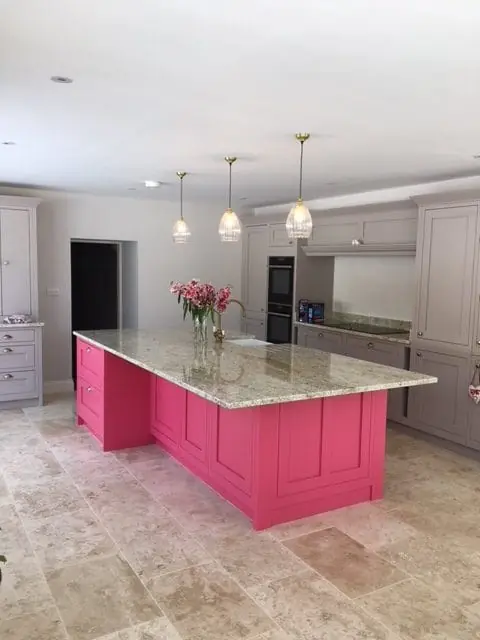
The cheapest kitchen extension is the one you don't build. If the room is big enough and it's only the kitchen that's tired, a new mid-range kitchen in the space you've got costs £8,000 to £14,000 fitted (MyJobQuote), and a good kitchen fitter can do it without a builder in sight. We'd rather you heard that from us.
Is a kitchen extension worth it?
A kitchen extension is worth it if you'll stay and use the space, but don't expect the sale price to cover the cost. Nationwide found that 10% more floor space adds about 5% to a typical home's value, and said plainly that it "can't identify the value associated with kitchen and bathroom renovations" (Nationwide, October 2025).
This bit gets said straight. On a Swale home at the average price of £287,990 (UK House Price Index, March 2026), that 5% is about £14,400, our sum. So a £60,000 kitchen extension is worth building for the way you'll live, not for the sale price. If you might move in the next few years, that gap is the number to sit down with.
How long does a kitchen extension take?
A typical single storey kitchen extension takes about 5 to 12 weeks on site, and 3 to 4 months if it's large (MyJobQuote, Homebuilding). Before that come design, approvals and the kitchen's own lead time, which can be several weeks for made-to-order units.
Plan for a stretch with no kitchen at all. One homeowner on Reddit, on a job that overran badly, wrote simply: "We've not had a kitchen since April." A microwave, a kettle and a washing-up bowl in the bath will get you through.
What we see on Kent jobs
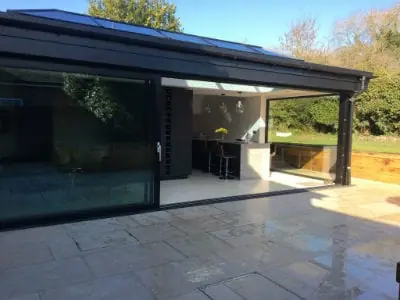
Most kitchen extension budgets go wrong in three places: the kitchen left off the quote, services that have to move, and glass that breaks the 25% rule. Risdon plans all three before the design is fixed, because each is cheaper to fix with a pencil than with a digger.
- The kitchen is planned first. "Too often, extensions are planned structurally before the kitchen layout is considered," says kitchen designer Emily Newmarch (Homebuilding). Risdon's design and build service plans the layout and the structure together.
- Every line is in the quote. Risdon prices every project item by item, with the materials measured and every cost set out, so you can see what's in and what isn't.
- You pay in stages. The stages are set out clearly before work starts.
- Warranties depend on the job. They vary with the materials, so Risdon explains yours in your quote.
I'd always rather see the whole number on day one: the build, the kitchen and the VAT on one page, even when that's £70,000 for 20m² rather than £56,000 for the room alone. A big number you understand is far less frightening than a small one that keeps growing. For the bigger picture on types of extension and how the build runs, see our guide to house extensions.
Kitchen extension cost questions
How much does a kitchen extension cost in the UK?
About £40,000 to £70,000 in 2026, with an average of around £50,000. In London and the South East it's £55,000 to £90,000. That's for a finished room with the kitchen in it. Smaller, simpler jobs start nearer £20,000.
How much is a kitchen extension per m²?
Roughly £1,300 to £2,500 per m² depending on finish, or £1,750 to £2,350 per m² of new space before VAT and fees, according to a quantity surveyor writing for Homebuilding & Renovating. The kitchen itself usually comes on top.
Does a kitchen extension price include the kitchen?
Often not. Many builders quote the building work only, and some quote before VAT. Ask every builder to say in writing whether the units, worktops, appliances and fitting are included, and whether the total includes VAT.
How long does a kitchen extension take to build?
Around 5 to 12 weeks on site for a typical single storey kitchen extension, and 3 to 4 months for a large one. Add time before that for design, approvals and the kitchen's own lead time.
Is a kitchen extension worth the money?
It's worth it if you'll stay and use the space. Nationwide found that 10% more floor space adds about 5% to a home's value, but it couldn't put a figure on kitchen work, so don't expect the sale price to cover the full cost.

William writes Risdon's guides with the team, a family building firm in Faversham that's been building across Kent for over 40 years.